It began with a sketch on a pub napkin and a refusing-to-die folktale whispered by a grandmother. Within months, a tiny team in Ireland released a game so singular — part myth, part multiplayer, part meditative escape — that players across continents fell into it. The headline is simple because the feeling is universal: Ireland made this game, and now the world can’t get enough.
Why this game feels different
-
A living folklore: At its heart the game reimagines Irish folklore for players who didn’t grow up with the stories. The spirits, the landscapes, the moral choices all feel rooted in an old-world storytelling tradition, but the gameplay treats those elements as modern systems — evolving AI spirits, emergent quests, and community-driven myths that change how players cooperate.
-
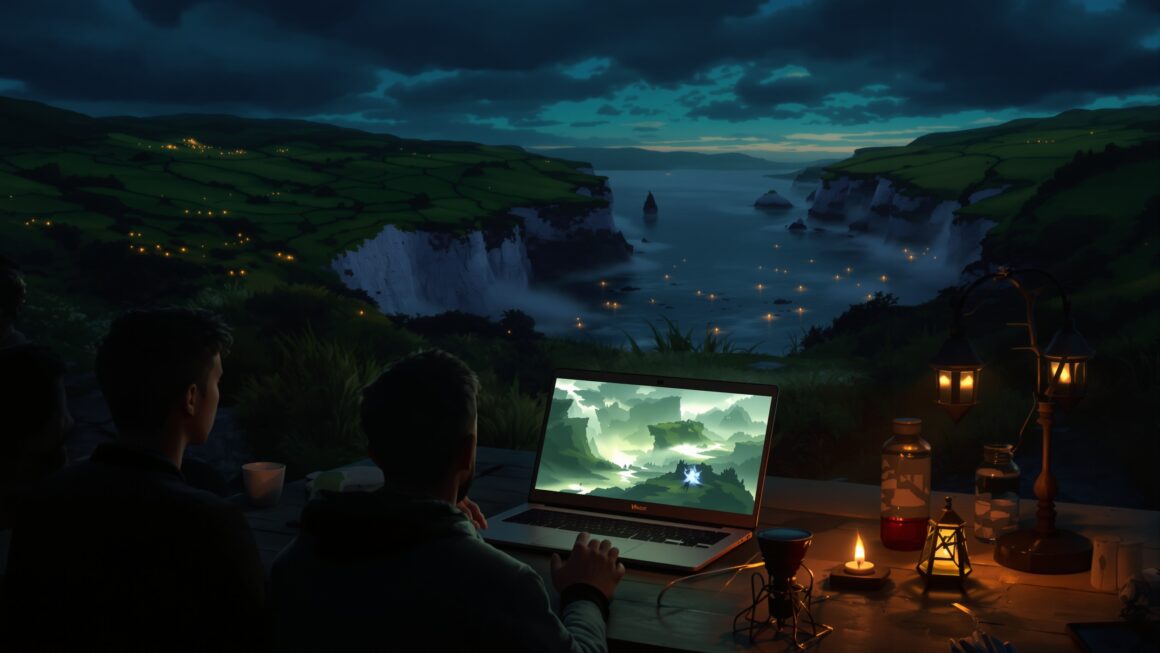
A look and sound that breathe: Gorgeous, hand-painted backdrops combine with minimal, haunting music that uses traditional instruments reinterpreted through electronic textures. The result is a sensory signature you recognize in five seconds and can’t forget.
-
Gameplay that invites sharing: It isn’t about beating a single-player campaign. The design encourages small rituals — lighting beacons together, trading memories, leaving messages in the world — that turn strangers into companions. That social, low-pressure play loop is what made clips, stream highlights, and tongue-in-cheek ritual guides explode across socials.
From a micro-studio to a global chorus
The team that built it is small — designers, a composer, a few artists, and a producer who once worked in tech support. They shipped the first playable demo on a shoestring budget and leaned into feedback from local players in Galway, Cork, and smaller towns. That grassroots testing gave the world a polished, emotionally precise product when it launched.
But the real growth came from communities. Players began to create their own “ritual content” — short videos of group syncs, fan art that turned game spirits into plushies, and serialized fiction that expanded the world. Each piece of fan labor made the game less a product and more a living culture.
Why the world is hooked
-
Emotional safety: The game rewards small acts of kindness and curiosity instead of leaderboard dominance. That makes it a refuge from high-stress competitive titles.
-
Mystery + mastery: There are secrets hidden in folklore songs, in weather patterns, and in the way players interact. Discovering them requires curiosity and cooperation, which breeds an engaged, generous community rather than gatekeeping.
-
Aesthetic export: The Irishness — the mist on the lough, the peat smoke in the soundtrack, the lyrical accents sprinkled through dialogue — feels authentic but also approachable. It invites players to learn, not to imitate.
What this means for Irish games and the wider industry
This game’s success is a reminder that compelling worlds don’t require blockbuster budgets — they require clarity of vision, cultural specificity, and the right invitation for players to belong. For Irish developers, it’s a signal boost: global attention, increased interest from publishers, and a renewed focus on folk traditions as a source of contemporary storytelling.
For the industry, it’s a lesson in design humility. Players are hungry for experiences that provide emotional shape rather than just mechanical complexity. This Irish game shows that restraint, craft, and cultural authenticity can scale to global tastes.
The longer arc
The early months of the game were about discovery — finding the rituals and the rules. The longer arc may be about stewardship: how the creators and the community keep the world alive without turning it into a franchised, homogenized IP. If the last two years are any guide, the answer lies in slow expansions, community-curated festivals inside the game, and thoughtful collaborations with artists and musicians that preserve the project’s original voice.
If you haven’t played it yet
Approach it like you would a folk tale: listen first, participate gently, and look for the quieter rewards. And if you do dive in, expect more than a pastime — expect to encounter a little island of shared imagination that millions, surprisingly quickly, decided to call home.
Final thought
Sometimes a global hit comes from a massive studio, and sometimes it comes from a kitchen table and a shared memory. This game proves the latter can be just as powerful: a small Irish spark that, lit in the right place, warmed the whole world.