This Traditional Irish Game Should Be Banned — And No One Is Talking About the Dangerous Price of Nostalgia
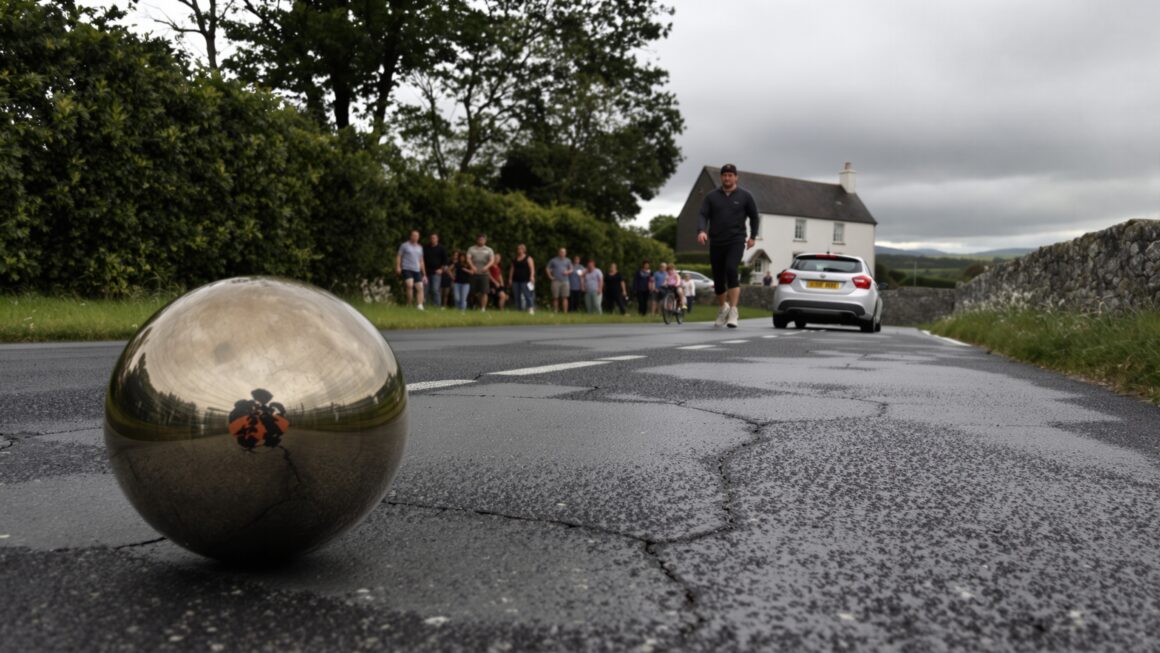
There’s a photo many of us have seen: a small, shiny metal ball arcing along a narrow country lane, cheering villagers lining stone walls, a caller marking the score. It looks timeless, charming — a slice of rural Ireland preserved against the tide of modern life.
That image hides a growing reality: a traditional road game that was once played when traffic was sparse is now being staged on increasingly busy public roads, creating a real and present danger for players, drivers, cyclists, residents and emergency services. That game is road bowling — and for the sake of public safety, it’s time to ask whether it should be banned on open roads.
Why a ban should be on the table
-
Public safety in a modern context: Road bowling was born in a time when lanes saw horse-drawn carts and a handful of cyclists, not SUVs, delivery vans, and tour buses. Narrow country roads with poor sightlines are not safe arenas for a projectile hurtling at unpredictable speeds. Near-misses between players and vehicles, and potential collisions with spectators, are now more likely.
-
Vulnerable road users at risk: Cyclists and pedestrians share many of the same rural lanes used for these events. When a game is played without proper road closures or traffic control, the risk for cyclists, dog-walkers, parents with strollers and other non-motorised users rises substantially.
-
Emergency access and response time: Ill-planned events can block narrow lanes that are vital access routes for ambulances, fire appliances and local services. Even a short delay can be critical in an emergency.
-
Insufficient regulation and liability gaps: Too many games are organised informally with little oversight, insurance or formal risk assessment. That leaves organisers, participants and bystanders exposed if something goes wrong.
-
Community disruption and nuisance: Residents report noise, parking chaos, litter, and restricted access to driveways on event days. Traditions shouldn’t be kept at the expense of neighbours’ daily lives and safety.
-
Changing demographics and tourism: Episodes that once involved small local crowds are now drawing larger audiences — including tourists unfamiliar with local customs — increasing unpredictability and amplifying risk.
Tradition vs. risk: a difficult balance
Road bowling is part of Ireland’s rural heritage. For many communities it’s social glue: shared rituals, bragging rights, local pride. Banning a tradition outright is emotionally charged and deserves careful consideration.
But traditions are not immune to scrutiny. When an activity poses measurable risk to life and limb in a modern environment, public safety must be paramount. That’s why some communities and local authorities have already started pressing for stricter controls — and why a full ban on games played on open public roads should at least be considered as part of a range of options.
What a responsible approach could look like
If the goal is to keep the spirit of the game alive without jeopardising lives, policymakers and communities can adopt alternatives and reforms rather than (or in addition to) an outright ban:
-
Move events to closed, purpose-built courses: Designated tracks or private stretches of road with proper safety features can replicate the game’s challenge while protecting bystanders and traffic.
-
Require formal permits and risk assessments: Any event on a public road should need an application process, public notice, traffic management plans and public liability insurance.
-
Implement mandatory safety measures: Marshals, barriers at high-risk points, speed restrictions on diversion routes, and clear signage for approaching motorists should be compulsory.
-
Limit scale and frequency: Smaller, localised matches or fewer annual fixtures reduce cumulative risk and disruption.
-
Invest in community consultation: Residents must be consulted and able to refuse or condition events that affect their access and quality of life.
-
Educate and modernise the game: Encourage training, protective equipment for participants, and codes of conduct to reduce reckless behaviour linked to alcohol or showboating.
A targeted ban may be necessary
If reform proves ineffective or unenforceable — for example, if organisers continue staging informal events that endanger public safety or obstruct emergency access —local authorities should consider targeted bans on playing the game on open public roads. A targeted ban would protect the public while still allowing the tradition to survive in properly regulated forms.
Conclusion: preserve culture, protect people
Heritage matters. But so do lives. The right response isn’t nostalgia-driven denial, nor is it an emotional crusade to wipe away rural customs. It’s a pragmatic, safety-first approach that recognises when a tradition has outgrown the environment in which it developed.
If communities value road bowling as part of their identity, they should be supported to adapt the game to the 21st century: move it off busy public roads, adopt clear safety rules, and work with local authorities to ensure events are safe, insured and respectful of neighbours. If those safeguards can’t be put in place and enforced, a ban on play on public roads is not only reasonable — it’s necessary.
Have you seen or taken part in a game on a public road recently? Share your experience with local councillors and call for a safety review — preserving tradition is only worthwhile if it doesn’t put people in harm’s way.